Your First Baseball Game: Follow the Count
Follow the count at your first baseball game to understand each plate appearance, spot when the balance shifts and know what to watch next.
At your first baseball game, the count tells you what is happening between the batter and pitcher: how many balls and strikes the batter has. Follow those two numbers and you can read each plate appearance without trying to track every player, pitch type or fielding position at once.
The simplest approach depends on what you want from the game. If you want the clearest starting point, watch the count change on the scoreboard. If you prefer to understand the tension of a particular pitch, listen for the umpire’s call and notice how the batter responds. Either way, treat the count like a small dial on a radio: each click changes what may happen next.
Start with the scoreboard if the action feels crowded
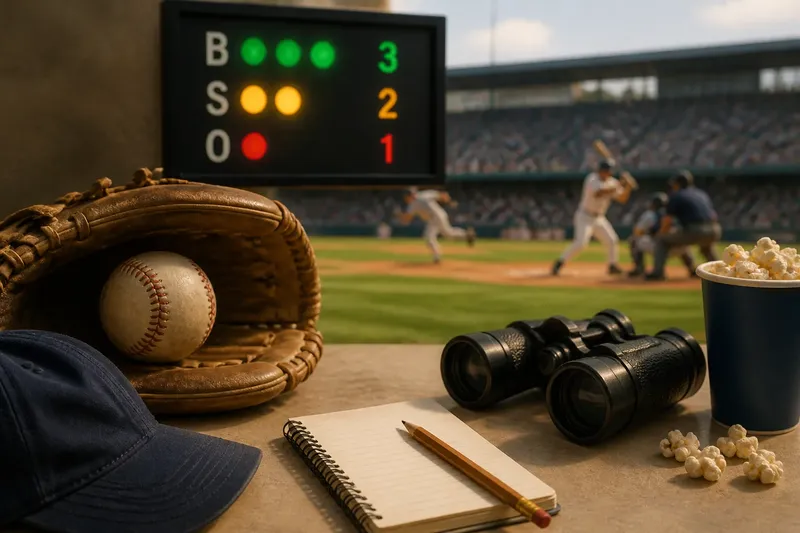
Find the display marked B and S, or look for a count shown as two digits. The first number is balls; the second is strikes. A count of 2–1 means two balls and one strike, not a score between the teams. If the stadium display uses separate lights, the lit indicators show the current count.
Watch the count after each pitch rather than trying to interpret the whole field. A pitch may be called a ball, called a strike, fouled off, or put into play. The count records the first three outcomes; once the batter hits the ball into fair territory, the plate appearance becomes a play in the field.
This is the best route if you are new to baseball or sitting where the pitch is hard to see. The scoreboard gives you a dependable reference after the crowd reacts, and it helps you rejoin the action if you missed a call. Do not worry about memorising the previous pitches. The current count is enough to understand what the batter and pitcher face now.
Use balls and strikes to read the batter’s position
A ball is a pitch outside the strike zone that the batter does not swing at. A strike can be called when a pitch crosses the zone without a swing, or recorded when the batter swings and misses. A pitch in the zone that the batter swings at and misses is also a strike.
Fouling a pitch usually adds a strike, but it does not create a third strike when the batter already has two. One exception is a foul bunt with two strikes, which counts as strike three. You can set that exception aside on a first visit; the scoreboard will show the result, and the general rule will carry you through most plate appearances.
At three balls, the batter is close to walking: a fourth ball sends the batter to first base. At two strikes, the batter is close to striking out: a third strike generally ends the plate appearance. These are not equal kinds of pressure. A ball can move the batter nearer to first without ending the contest, while a third strike can finish it immediately.
For a straightforward first watch, keep one question in mind: which side is nearer to its next major outcome? At 3–1, the batter is one ball from a walk, while the pitcher still has room to throw a strike. At 1–2, the pitcher is one strike from a strikeout, so a swing or a foul can matter more. This gives each pitch a clear purpose without requiring you to guess what the pitcher intends.
Choose where to look according to your seat
If you can see the scoreboard and the plate, divide your attention between them. Watch the pitch, then check the call and count. If the scoreboard is out of view, use the umpire’s signal and the crowd’s response as clues, then glance at a nearby display or ask a companion for the count during a pause.
From behind home plate, you may have a clearer view of where pitches cross the plate, though the catcher and umpire can partly block the view. From the baselines or farther down a side, the pitch’s path may be harder to judge. That is no obstacle: follow the official call rather than trying to decide whether a pitch was truly inside the zone.
If you are watching a broadcast, the on-screen count is useful, but the camera may cut away between pitches. Listen for the umpire’s call and the sound of contact, then return to the graphic when it appears. If you are at the ground, a pause between pitches is a good moment to check the scoreboard rather than stare at it throughout.
Decide what to watch after each kind of pitch
When the pitch is called a ball, notice whether the batter stays still or starts preparing to swing more readily. A run of balls can bring the batter closer to first base, and the pitcher may need to find the strike zone. You do not need to infer a strategy from one pitch; simply note how the count has changed.
When a pitch is called a strike or the batter misses, check whether the count has become more urgent. With two strikes, a foul keeps the batter alive, while another strike can end the turn. Watch the batter’s stance and timing, but do not assume that a change in movement reveals a particular plan.
When the batter puts the ball in play, shift your eyes from the plate to the field. The count has done its job for that plate appearance. Follow the ball and the runners, then return to the scoreboard when the next batter settles in.
Imagine you arrive in the middle of an inning and see a batter with a 3–2 count. You know the next ball would send the batter to first, while a strike could end the plate appearance; if the batter fouls off the pitch, the count stays full. You can watch the next pitch, check the call, and understand why the crowd reacts without knowing what happened earlier in the game.
What should you watch when the count gets close?
What does a full count mean?
A full count is three balls and two strikes. The next ball gives the batter a walk, while a strike can end the plate appearance; a foul usually keeps the count full.
Does every foul ball add a strike?
Most foul balls add a strike only until the batter has two strikes. With two strikes, an ordinary foul does not make a third strike, though a foul bunt does.
What happens after four balls?
The batter is awarded first base, and runners already on base may also advance if the batter’s award forces them forward. The play pauses so the next batter can take a turn.
Can a batter reach base after striking out?
Sometimes, if the catcher does not secure the third strike and the applicable rules allow the batter to run to first. For a first visit, follow the umpire’s call and the players’ movement rather than trying to judge that special situation in advance.
Follow one plate appearance at a time
You do not need to remember every count in the game. Pick one batter, check the count after each pitch, and notice when the action shifts from the plate to the field. That is enough to build a simple thread through an inning.
If you lose track, wait for the next pitch and read the scoreboard again. A plate appearance begins afresh for the next batter, even though the inning’s outs and runners still matter to the wider game. On your first baseball game, following the count is a useful way to keep your attention on the immediate contest while leaving room to notice the rest when it catches your eye.