The Give-and-Go: Why a Pass Can Move a Defence
Learn how the give-and-go creates space after a pass, why the return ball can fail and what teammates can change to make the movement useful.
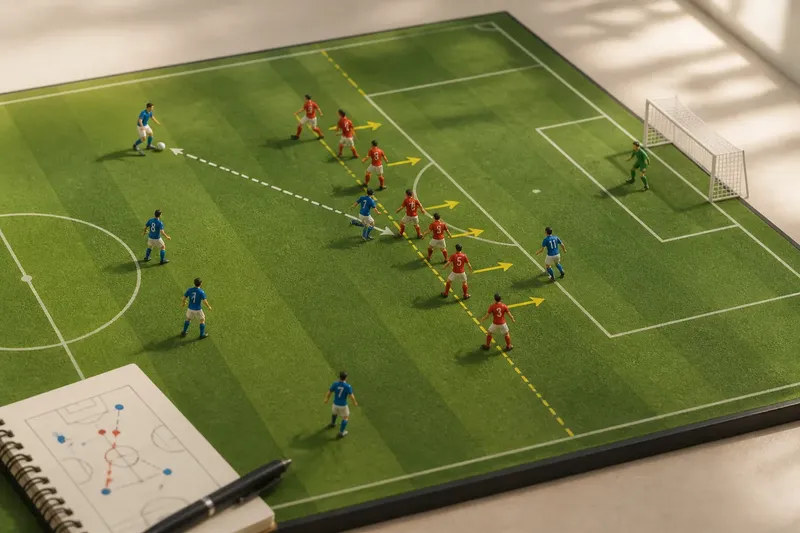
Why can a short pass pull a defender out of position even when the ball barely travels? In football, the give-and-go works because the passer moves immediately after releasing the ball, asking the defence to track a player and protect space at the same time. The pass starts the action; the run creates the next option.
That makes the move easy to recognise but harder to execute than it looks. A runner can leave too early, a teammate can return the ball into traffic, or the defence can simply pass the runner on. Each problem has a different cause, so the fix is not always “run faster”.
The return pass needs a new angle
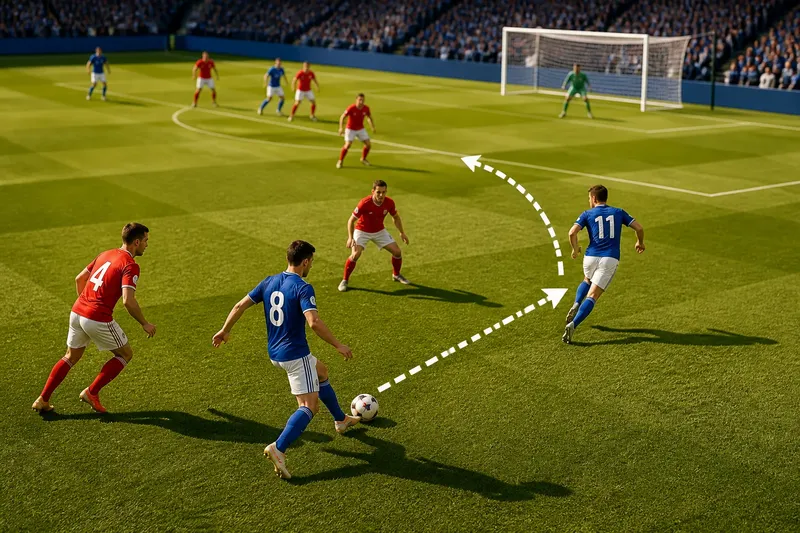
A basic give-and-go has two players. One passes to a teammate, then moves into space to receive the ball back. The passer’s run should change the picture: it may take them beyond a marker, draw that marker away from a teammate, or open a route through a gap.
The return ball is not an automatic obligation. If the runner is covered, the player on the ball can keep possession, pass elsewhere or use the movement to open another route. The movement still matters if it makes a defender turn or creates room for someone else.
Think of a defender as a doorstop holding one space shut. A sharp run can pull that doorstop aside; the team can then use the opening, even if the runner never receives the ball.
The runner leaves before the passer can look up
A common breakdown is a run that begins before the first pass has reached its target. The runner may be moving in the right direction, but the receiver is still controlling the ball and cannot see or serve them. The gap between pass and run becomes a gap in timing.
Try making the pass the trigger. The passer releases the ball, then accelerates into a clear lane. The receiver can take a touch or play first time according to the pressure and their skill, but should know where the runner intends to go.
Imagine a hypothetical training situation in which a midfielder passes to a winger and sprints towards the touchline before the winger has controlled the ball. The winger is forced to choose between a hurried return and protecting possession. If the midfielder instead waits for the pass to arrive before moving diagonally towards the penalty area, the winger gets a clearer view of the route and can decide whether the return is on.
The pass reaches a teammate who cannot return it
Sometimes the first pass is accurate, yet the receiver has a defender close behind or is facing away from the intended return route. Asking for a quick one-two in that position may invite a turnover. The problem is not necessarily the runner’s effort; the first pass has made the next action difficult.
Before passing, check the receiver’s body shape and pressure. A teammate facing forward with room to turn may be able to play the ball into the runner’s path. A teammate boxed in near the touchline may need support at their feet instead. Adjust the first pass to what the receiver can actually do.
If the receiver cannot return the ball safely, they can use a simple alternative: shield it, pass to another teammate or carry away from pressure. The runner should continue only if the movement is still useful. A run that drags a marker towards the ball can leave another player free on the far side.
The runner arrives on the defender’s line
A straight sprint towards the ball can bring the runner and defender into the same lane. The defender then has a simple job: stay between the runner and goal. Even a well-weighted return may be blocked because the attacker has not changed the defender’s position.
Look for a diagonal route rather than running directly back towards the passer. The runner can move across the defender’s shoulder, curve behind them or head into a channel between defenders. Which route fits depends on where the ball is, where the goal is and how much space the defence leaves.
Make the run visible to the teammate with the ball. A curved movement can disappear behind a defender’s body, so the runner may need to cross into the passer’s sightline before turning into the open lane. The aim is not to draw a pattern for its own sake; it is to offer a route the passer can see and reach.
The defence follows the runner and closes the space
A defender who tracks the run can seem to cancel the move. But the give-and-go may still have done its job: the defender has left another area to follow. The receiver should look beyond the runner, not only for the return pass.
For example, a hypothetical forward passes to a teammate near the edge of the box and runs towards goal, taking a centre-back with them. If a second attacker moves into the space the defender has left, the teammate can pass to that player instead. The expected observable result is a new option in the vacated channel, not necessarily a pass back to the original runner.
Teammates need to avoid crowding the same opening. One player can run beyond the ball, another can stay available for a pass at the receiver’s feet, and a third can hold a wider position. Those roles give the player in possession choices instead of turning the attack into a queue.
What should you look for in a give-and-go?
When should the passer start running?
Begin the run as the pass is released, not while the receiver is still waiting for it. The timing gives the receiver a moment to see the ball arrive and then assess the moving option.
Does the ball always have to come back?
No. A return pass is one possible reward, but a run can pull a marker away and free a teammate. Watch what space opens as well as who receives the ball.
What if the receiver is under pressure?
The receiver should protect the ball or choose a safer pass rather than force a return into a defender. The runner can adapt by continuing through the lane or stopping where they offer useful support.
How can you tell whether the movement worked?
Check whether a defender had to turn, follow or leave a space, and whether the team gained a usable passing route. The runner need not touch the ball for the action to have changed the defence.
Use the movement even when the return is closed
When a give-and-go breaks down, identify the first point where the options narrowed: the run began too soon, the receiver was facing pressure, or the route led into a defender. Change that part next time instead of demanding a quicker pass from everyone.
To understand how a give-and-go can move a defence, watch the players without the ball as well as the one carrying it. A defender’s turn, a teammate stepping into a vacated lane or a marker left behind can reveal the value of the run, even when the passer never gets the ball back.